Gulf of America: Inside the Lawsuit That Named Leavitt as a Defendant
The AP wouldn't change two words in its style guide. It cost them the Oval Office.
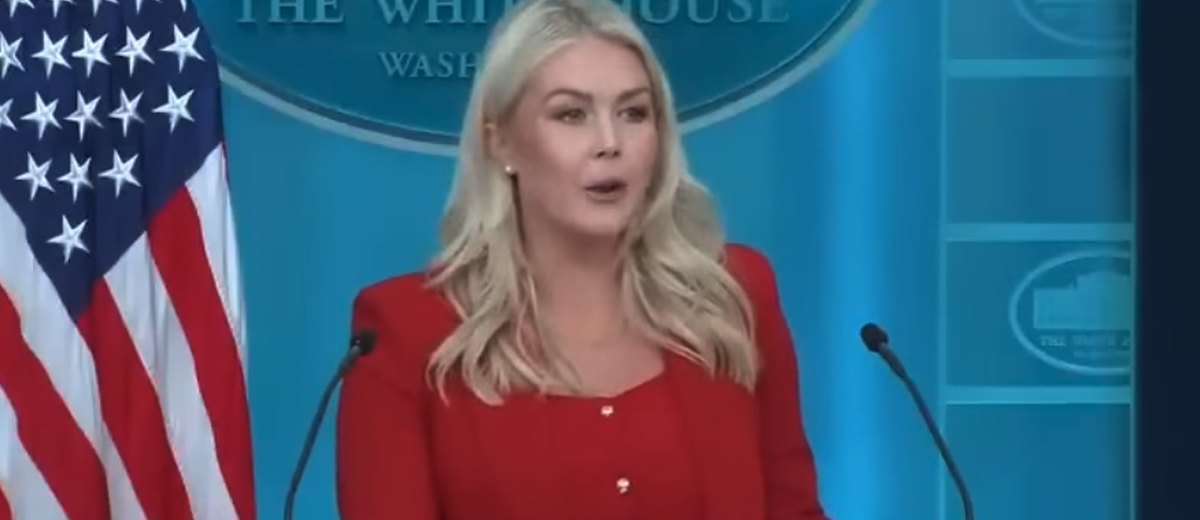
This is the fight that turned a style-guide disagreement into federal litigation. It is, no exaggeration, one of the more consequential press-freedom cases of the decade.
How it started
On January 20, 2025, Trump signed Executive Order 14172, redesignating the Gulf of Mexico as the "Gulf of America."
The Associated Press declined to adopt the new name in its wire copy. Their reasoning was operational, not political: the AP writes for a global audience across roughly a hundred countries, and the body of water is called the Gulf of Mexico basically everywhere else on Earth. Changing it would make their copy confusing to most of their subscribers.
On February 11, 2025, the White House barred AP reporters from press pool events. Deputy Chief of Staff Taylor Budowich characterized the AP's position as misinformation.
The AP sued. Named defendants: Budowich, Chief of Staff Susie Wiles, and Press Secretary Karoline C. Leavitt.
The allegation against Leavitt specifically
The complaint alleged that Leavitt told the AP's chief White House correspondent the outlet would be barred from White House areas unless it used "Gulf of America." That's the specific factual claim that put her name on the case caption — and it's the difference between "the White House made a policy" and "an official conditioned access on editorial compliance."
The ruling timeline
- Feb 24, 2025: District Judge Trevor McFadden denies the AP's request for a temporary restraining order.
- April 8, 2025: McFadden rules the White House must lift the restrictions while litigation proceeds — but stays his own order pending appeal.
- June 6, 2025: A three-judge D.C. Circuit panel, 2–1, grants a partial stay. The holding: the First Amendment doesn't apply the same way to restricted spaces like the Oval Office and Air Force One. AP access to the East Room is upheld.
- July 22, 2025: The appeals court unanimously denies the AP's request for en banc review.
Net result: the AP got the East Room back and lost the Oval Office and Air Force One. The case remains pending before the D.C. Circuit.
Why the June ruling is the scary one
Read that panel holding again, because it's doing enormous work. If the Oval Office and Air Force One are "restricted spaces" where First Amendment viewpoint-discrimination protections don't fully apply, then any administration can — as a matter of law — screen access to the President's most newsworthy settings based on how much it likes your coverage.
That's not a Trump-specific tool. That's a permanent addition to the executive branch's toolkit, available to every future president of every party.
The other side, honestly stated
The administration's argument had legal force, which is why it partly won. The President is not constitutionally obligated to give any particular private organization a seat in his office. No outlet has a vested property right to Air Force One. The AP is a private company that made an editorial choice; the government made a different choice about who it invites into non-public spaces. Judges found that reasoning persuasive enough to grant a partial stay.
The counter, which the ACLU of DC and press-freedom groups pressed hard: it's not about a right to access, it's about retaliation. The government can't hand out a discretionary benefit and then yank it specifically because it disliked your protected speech. That's the whole ballgame, and it's still unresolved.
Next up: the combat log — "your mom did," "left-wing hack," and the fights that made her famous.